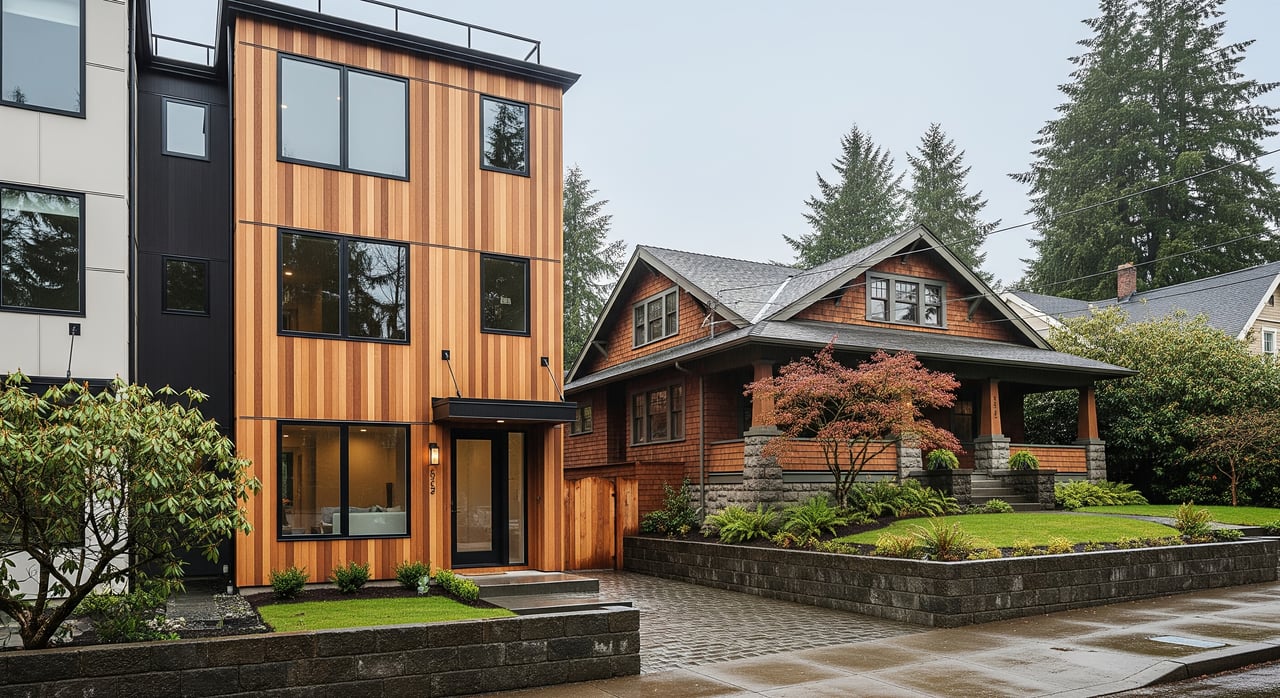
Townhome vs House in SW Portland: Total Cost Guide
January 8, 2026
January 8, 2026
Should you buy a townhome or a single-family house in Southwest Portland? The right answer comes down to what you will pay over time, not just the sticker price. If you want lower maintenance and predictable fees, a townhome can be attractive. If you want more control, yard space, and broader resale appeal, a house may be worth the added responsibility. In this guide, you will learn how total cost works in SW Portland, what to budget for each property type, and how to build a clear monthly plan. Let’s dive in.
When you compare a townhome and a house, look at the full lifecycle of costs. Your total cost includes purchase and loan fees, monthly carrying costs, and long-term repairs or assessments. A careful comparison helps you avoid surprises and stay aligned with your goals.
At a minimum, plan for these buckets:
Southwest Portland spans neighborhoods like Hillsdale, Multnomah Village, West Hills, Collins View, and areas along Terwilliger and Barbur. You will find townhome clusters near commercial corridors and larger, steeper single-family lots in the hills. Buyers who want lower maintenance often lean toward townhomes, while those seeking more space and control tend to choose houses.
Local geography matters. Sloped lots, mature trees, and environmental or historic overlays can influence your repair costs, permit timelines, and insurance. Proximity to major roads and transit can also affect appeal and everyday costs.
Townhomes often sell for less than detached houses in the same micro-neighborhood. That smaller purchase price can reduce your down payment, mortgage principal, and initial property tax base. Prices vary by location and building quality, so always compare recent nearby sales.
Plan for these upfront items:
Your monthly payment is more than principal and interest. Build a realistic budget that covers predictable and variable costs alike. This helps you compare a townhome’s steady HOA dues with a house’s do-it-yourself exterior bills.
Include:
Townhomes shift many exterior responsibilities into a monthly HOA fee. That fee may cover roofing, siding, landscaping, common areas, and part of the insurance. You gain predictability, but you also take on HOA governance and the possibility of special assessments.
Houses give you more control and flexibility over timing and quality of work. You also take on variable exterior bills for roof, siding, paint, landscape, tree care, driveway, and drainage. For budgeting, larger projects tend to be lumpy rather than monthly.
A useful lens: you trade variable, occasional big-ticket expenses in a house for a predictable monthly HOA fee in a townhome. The best choice depends on your cash flow preferences and tolerance for swings in maintenance costs.
Townhome owners should review the HOA’s master policy and the CC&Rs. Some master policies cover the building exterior and common elements, leaving you to carry an HO-6 policy for interior finishes, personal property, and loss assessment. If the master policy is limited, you may need additional dwelling coverage.
For single-family houses, a standard HO-3 policy usually covers the structure, liability, and personal property. Premiums reflect size, age, construction type, and local risk factors. In parts of SW Portland with trees and slopes, insurers may price for wind or drainage-related exposures.
Townhomes with shared walls often have lower heating and cooling needs per square foot. Smaller or no yards can reduce irrigation costs. Some HOAs include portions of water, sewer, garbage, or exterior lighting.
Detached houses typically have higher energy demand and outdoor water use, especially with larger lots and exterior lighting. Always request a 12-month utility history when possible and use it to build your budget.
For houses, plan for routine exterior upkeep and larger capital items like roofs, siding, decks, and sewer laterals. On hillside lots, add a contingency for drainage, retaining walls, or foundation work if inspections suggest risk.
For townhomes, interior systems are still your responsibility, while the HOA manages exteriors and common elements. Budget for special assessments if reserves are low or major projects are planned.
A practical rule: set aside 1 to 4 percent of the property value each year for maintenance and repairs. Use the lower end for newer, well-maintained townhomes and the higher end for older or hillside houses.
Property taxes in Multnomah County are tied to your assessed value, and the assessed value is influenced by your purchase price when you buy. A lower purchase price, common for many townhomes, can mean a lower property tax bill right after closing. Actual taxes depend on your parcel’s rate and any local bond measures.
If you are comparing two properties, pull the tax history for each parcel and calculate the annual amount as a monthly cost. Revisit this number each year to account for any levies that pass.
Topography is a key cost driver in Southwest Portland. Steeper lots can increase the need for drainage improvements, retaining walls, and foundation work. A targeted inspection can help you identify these risks and budget accordingly.
Mature trees add beauty and shade but can increase routine maintenance and potential repair costs. Think about gutter cleaning, limb work, and possible root conflicts with driveways and sewer lines. Historic or environmental overlays may limit exterior changes or add permitting steps, which can increase time and cost for projects.
Create a simple comparison with monthly figures for each property. For accuracy, use actual quotes and verified bills whenever possible.
Include:
Add these to find your total monthly carrying cost for each property. Review the difference and test a few scenarios, like a roof replacement year for a house or a special assessment year for a townhome.
This example is illustrative to show the framework. Plug in real numbers before deciding.
The house will likely have a higher mortgage payment and higher annual maintenance allocation. The townhome may have lower taxes and insurance on a replacement-cost basis, depending on coverage and master policy, but you must account for the HOA dues and possible assessments. Your final choice should be based on the monthly total and your comfort with maintenance variability.
Detached houses often attract a broader buyer pool and may command a premium where lot size and outdoor space are valued. On steep lots, the buyer pool can narrow due to access and maintenance concerns. Townhomes appeal to buyers who want low maintenance and proximity to services or transit, which can support demand.
Neighborhood nuance matters. A well-located townhome near amenities can outperform a poorly located house. Your expected holding period is important. If you plan to move in a few years, factor in transaction and potential HOA transfer costs. If you plan to hold longer, weigh long-term maintenance, assessments, and the property’s likely buyer pool.
For a townhome, ask for:
For a house, ask for:
For either, pull:
If you want a clear, data-backed comparison for Southwest Portland, we can assemble the documents, validate the numbers, and build a total cost worksheet tailored to your short- and long-term goals. With finance and construction expertise, premium marketing, and concierge coordination, we guide you from analysis to closing with confidence. Ready to compare your options side by side and move forward on the right property? Connect with Gaston Sanchez for a complimentary consultation and home valuation.
Stay up to date on the latest real estate trends.
When you’re selling, I’ll position your home to achieve top dollar quickly through strategic marketing, technology, and team collaboration. When you’re buying, I’ll ensure you have real-time market data, exclusive insights, and a strong negotiating position.