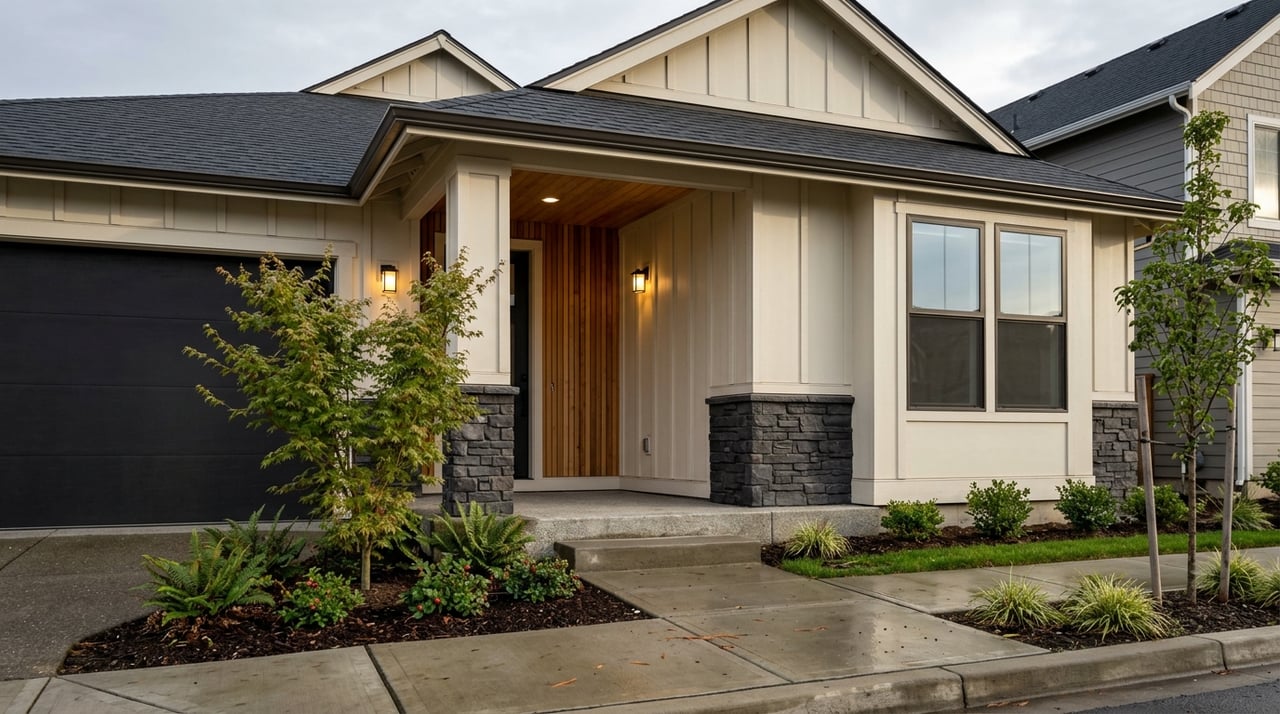
Guide to Oregon City New Construction Homes
July 9, 2026
July 9, 2026
If you are shopping for a brand-new home in Oregon City, you are not looking at one giant menu of options. You are comparing a handful of very different community types, each with its own price point, layout, and ownership details. The good news is that once you understand how Oregon City new construction is structured, it becomes much easier to narrow your search and buy with confidence. Let’s dive in.
New construction in Oregon City is currently centered around a few distinct projects rather than dozens of active subdivisions. Based on current builder activity and city planning records, the main categories are detached homes at Serres Farms, townhomes at Serres Farms, acreage homes at The Reserve at Riverstone, and the longer-range Park Place growth area.
That matters because your decision is likely less about flashy neighborhood branding and more about product type, budget, lot size, and timeline. In practical terms, most buyers are choosing between attached housing, standard detached homes, or larger acreage properties.
Serres Farms is one of the clearest examples of mainstream new construction in Oregon City today. Pacific Lifestyle Homes describes this phase as a 44-home community near Holcomb Elementary and I-205, with floor plans ranging from 2 to 5 bedrooms and about 1,700 to 3,181 square feet.
The available home mix includes single-level layouts, primary-on-main designs, and multigenerational options. On a recent builder snapshot, pricing ranged from $671,000 to $1,099,000, with a combination of to-be-built, available-now, and leaseback listings.
For many buyers, this is the broadest and most flexible new-build option in Oregon City right now. You may find a better fit here if you want more plan variety, a traditional detached-home format, and the possibility of either a quick move-in or a build-from-scratch path.
The larger Serres Farms planned unit development is bigger than the active detached phase alone. City records describe a project with 123 lots and 142 dwelling units overall, including 106 single-family detached homes and 36 duplex units across two phases.
The same record also outlines a 2-acre park, sidewalks, trails, and stormwater improvements. For you as a buyer, that gives helpful context because it shows this is not just a few homes on scattered lots. It is part of a more structured neighborhood framework with planned infrastructure and shared spaces.
If you want a lower entry point into Oregon City new construction, the Serres Farms townhome project is worth a close look. Forrest Ridge Homes markets this as a 14-lot development with 28 townhome units ranging from about 1,500 to 1,900 square feet.
The project includes private driveways and landscaped community spaces, with advertised pricing in the high $400,000s to mid $500,000s. Compared with detached homes, this option may appeal to buyers who want newer construction and a more manageable footprint at a lower purchase price.
This attached-home segment fills an important gap in the local market. If detached new construction feels out of reach, townhomes can offer a more accessible path while still giving you modern finishes, new systems, and a community setting.
At the upper end of the Oregon City new-construction market, The Reserve at Riverstone serves buyers looking for more land and a more private homesite feel. Garrette Homes describes this community on South Brunner Road as a five-homesite acreage development with lots ranging from about 1.88 to 6 acres.
Builder information shows pricing starting from $1.2 million, with current community pricing listed from $1,376,000. Homes range from 3 to 7 bedrooms and roughly 2,958 to 4,190 square feet, with floor plans such as the Tahoma, Shasta, Rainier, Cascade, Alpine, and Palisade.
Garrette also notes that the acreage may allow for a 900-square-foot ADU or a dedicated shop. If you are looking for a larger lifestyle property, more separation from neighbors, or room for specialized use, this is a very different product from a typical subdivision lot.
Park Place is important, but not in the same way as an active builder community. It is best understood as Oregon City’s major future-supply framework rather than a current inventory source.
The Park Place Concept Plan covers nearly 500 acres that were added to the metro urban growth boundary in 2002. The plan lays out 1,459 new dwelling units across two mixed-use neighborhoods, along with commercial nodes, a civic institution, an 8 to 10 acre community park, a 3 to 5 acre neighborhood park, and trail connections.
The related Urbanization Plan, adopted January 5, 2022, focuses on how streets, sidewalks, and bike lanes will be added while retaining a rural feel. For buyers, the main takeaway is simple: Park Place points to where future Oregon City housing growth is expected, but it is not the same as shopping active listings today.
When buyers compare Oregon City planned communities, they are usually weighing four things first. Those factors often matter more than the community name itself.
Current pricing creates a clear ladder. Serres Farms townhomes sit at the lower end of the active new-build market, Serres Farms detached homes cover a wide middle-to-upper range, and Riverstone serves the acreage luxury segment.
Your daily lifestyle matters here. Townhomes offer a smaller footprint, detached homes offer more traditional separation and plan variety, and acreage communities offer more land and a more custom-home feel.
Some homes may be available now, while others are still to be built. Builder process pages show that timelines can vary depending on whether you are buying a quick move-in home or choosing structural and design selections before permitting and construction.
Your total monthly cost is not just principal, interest, taxes, and insurance. In planned communities, HOA obligations, shared-space maintenance, and reserve funding can also affect the real cost of ownership.
If you are buying in an Oregon planned community, it is smart to review HOA documents with real care. Oregon law requires homeowners associations in planned communities to establish a reserve account for major maintenance, repair, or replacement items that are expected to need work in more than one and less than 30 years, and the annual budget must include funding for that reserve account.
That does not tell you what any one community’s dues will be. It does tell you that reserve planning and common-area obligations are real parts of the ownership picture.
Serres Farms is a useful local example. City records say the project’s 2-acre park may be dedicated to the city, but if that dedication is not accepted, an HOA would own and maintain it.
For you, the takeaway is to look beyond the list price. Ask for the HOA budget, reserve information, and details on what common areas are maintained by the association, especially in attached-home communities or neighborhoods with parks, trails, or landscaped shared spaces.
Buying a new home in Oregon City involves more moving parts than buying a resale home. The city says a new single-family detached home requires permits from Planning, Building, and Public Works, and that new homes are typically reviewed within about two weeks for compliance with planning and development standards.
The city also assesses System Development Charges, and some projects may require public improvements such as street work, sidewalk work, or additional dedication. That helps explain why builder timelines can shift and why one homesite may not follow the same timeline as another.
Townhomes follow a similar path, but the approval process can be more layered. Oregon City says existing townhome lots are typically reviewed as a Type I land-use application within two weeks, while townhome subdivisions usually require Type II land-use approval before building permits are issued.
Public Works may also issue permits related to subdivision or site plans, utility extensions, erosion control, grading, driveways, sidewalks, and right-of-way work. In plain terms, attached projects can carry extra development steps before vertical construction even begins.
Builder process pages show a fairly consistent sequence. That usually includes selecting the home and homesite, making structural choices early enough for permitting, signing the purchase agreement, securing loan approval, completing design selections, attending a pre-construction meeting, moving through the build phase, and then closing after final orientation.
Post-closing support can also be part of the experience. Pacific Lifestyle Homes and Garrette Homes both describe follow-up warranty touchpoints after closing, including check-ins around 60 days and 11 months.
The best way to shop Oregon City new construction is to compare communities through a financial and lifestyle lens. Start by identifying which category fits you best: attached, detached, or acreage.
Then compare the details that affect your long-term experience:
This approach keeps you focused on the factors that truly shape value. It also helps you avoid falling in love with a model home before you have weighed timeline, monthly costs, and ownership responsibilities.
Oregon City’s current mix gives buyers several distinct entry points into new construction. You can look at townhomes if you want a lower initial price, detached homes if you want more plan variety and a classic neighborhood setting, or acreage communities if you want more land and privacy.
Just as important, the city’s planning pipeline shows that future growth is being thought through at a larger scale. With projects like Park Place and the city’s broader middle-housing framework, Oregon City is not standing still.
If you want a clear, data-driven way to compare Oregon City new construction and planned communities, Gaston Sanchez can help you evaluate pricing, timelines, builder process, and the ownership details that matter before you commit.
Stay up to date on the latest real estate trends.
When you’re selling, I’ll position your home to achieve top dollar quickly through strategic marketing, technology, and team collaboration. When you’re buying, I’ll ensure you have real-time market data, exclusive insights, and a strong negotiating position.