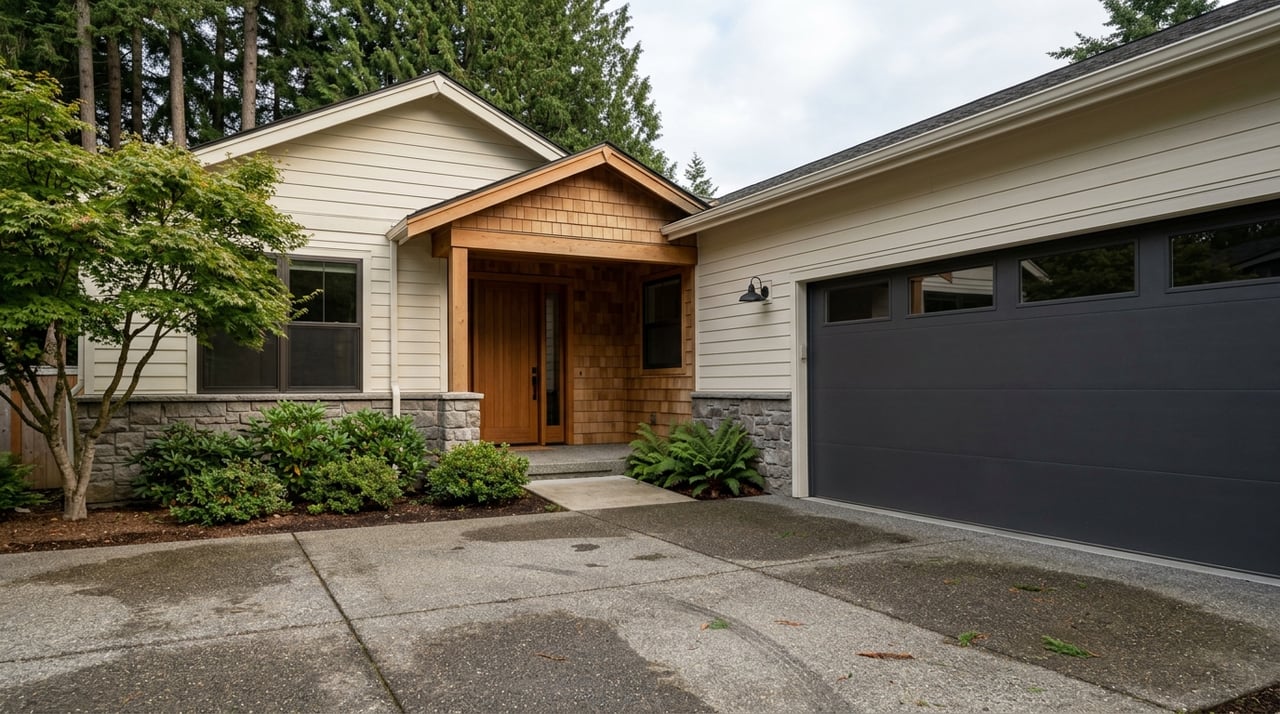
West Linn Move-Up Seller Playbook
June 25, 2026
June 25, 2026
Wondering how to sell your current home and buy your next one in West Linn without the process turning into a scramble? If you are moving up in price, size, or features, the challenge is rarely just selling. It is lining up timing, budget, disclosures, and your next purchase in a market that does not move the same way in every neighborhood. This guide will help you think through the numbers, timing, and strategy so you can make your next move with more confidence. Let’s dive in.
West Linn is not moving at one speed right now. Realtor.com’s May 2026 snapshot shows 224 homes for sale, a median listing price of $849,000, a median sold price of $807,000, a 100% sale-to-list ratio, and a median 43 days on market. At the same time, Zillow reports a typical home value of $780,841 with homes going pending in about 12 days, while Redfin shows a median sale price near $800,000, about 24 days on market, and roughly two offers on average.
Those numbers can look contradictory at first, but they really point to one thing: precision matters. Different platforms use different timeframes and methods, so broad citywide averages only tell part of the story. For a move-up seller, the better approach is to price your current home carefully and plan your purchase strategy before you list.
West Linn’s neighborhood list-price medians fall into clear bands. Parker Crest is around $619,450, Willamette around $659,000, and Bolton around $679,900. Sunset is around $789,000 and Hidden Springs around $849,500, while Rosemont Summit, Savanna Oaks, and Robinwood push into higher price tiers at roughly $987,500, $1,099,000, and $1,127,495.
That spread matters if you are moving from one part of West Linn to another. Your current home could be competing in one pricing environment while your next home sits in a very different one. A move-up plan built only on citywide averages can miss that gap.
Inventory also changes by neighborhood. Realtor.com’s snapshot shows the highest counts in Willamette with 50 homes for sale, Robinwood with 33, Sunset with 26, and Bolton with 25. Other areas like Rosemont Summit and Canemah each show 11, while Hidden Springs shows 14 and Parker Crest 12.
For you, that means the sale side and the buy side may feel very different. If you are selling in a neighborhood with more competition but buying in an area with fewer options, your strategy needs to account for that imbalance early.
Before you think about showing schedules or open houses, get clear on your numbers. A move-up sale is easier when you know what your current home may net and what price range feels comfortable for the next purchase. This is where a data-driven pricing conversation can make a big difference.
You also want to leave room for the full cost of moving. CFPB advises buyers to reserve cash for closing costs, moving expenses, repairs, home improvements, and an emergency cushion of three to six months of expenses. It also notes that closing costs typically run about 2% to 5% of the purchase price, excluding the down payment.
Property taxes are part of the move-up equation in Oregon. Taxes are based on assessed value and combined district rates, and a property’s maximum assessed value generally cannot rise by more than 3% per year unless there are qualifying property changes. If you move into a more expensive home, your tax picture may shift, so it is smart to model that before you commit to a target price.
A larger home payment is only part of the story. You also want to understand how taxes, reserves, and closing funds affect your monthly comfort level.
A smoother move-up sale usually starts with clean pre-listing preparation. In Oregon, sellers’ agents are expected to keep a signed listing agreement and a completed Seller’s Property Disclosure Statement in their records. Under ORS 105.465, the seller generally must complete and deliver that disclosure statement to each buyer who makes a written offer, subject to statutory exclusions.
If your home was built before 1978, lead-based paint rules may apply. Federal law requires disclosure of known lead-based paint hazards and available records, delivery of a lead hazard information pamphlet, and an opportunity for the buyer to conduct a lead inspection before ratification.
The best time to organize paperwork is before your home hits the market. That includes disclosures, repair notes, maintenance records, and a realistic conversation about pricing and presentation. A coordinated pre-listing plan can reduce stress once offers start coming in.
For many move-up sellers, this is also the point where staging, photography, and showing logistics should be mapped out. Strong presentation matters, especially in neighborhoods where buyers have more choices.
This is often the biggest decision in a move-up transaction. CFPB says that if you want to move, you normally try to sell your home first before buying another one. It also notes that buying can be risky and expensive if you may need to move again within a few years because selling and buying both come with transaction costs.
For many households, selling first creates cleaner budget math. You know what you net, you reduce carrying risk, and you can shop for the next home with clearer boundaries.
A sell-first strategy often works best when:
In West Linn’s lower and middle price tiers, this route often gives more flexibility. If your next move depends on your exact proceeds, selling first can help you avoid overreaching.
A buy-first strategy can make sense when the right replacement home is hard to find. In some of West Linn’s higher price tiers, inventory can be thinner, which may justify acting first if a strong-fit property comes available. Still, that approach requires careful planning.
CFPB defines a temporary or bridge loan as a loan with a term of 12 months or less, including a loan used to buy a new dwelling while planning to sell the current one within 12 months. In simple terms, bridge financing can solve a timing issue, but it is still short-term debt and needs a clear payoff plan.
Sometimes the cleanest move-up strategy includes a short stop between homes. That can lower pressure on your sale and give you more freedom on the buy side. In West Linn, though, temporary housing may not be cheap or easy to secure.
Realtor.com reports 30 rental listings with a median rent of $1,672 per month, while Zillow reports an average rent of $2,430. The methods differ, but both suggest that renting between closings can add real cost to your move-up budget.
Rental supply is especially tight in some higher-end areas. In Realtor.com’s snapshot, Savanna Oaks had one rental listing, while Hidden Springs, Parker Crest, Rosemont Summit, Marylhurst Heights, and Skyline Ridge each had none. If you may need to rent between closings, it helps to widen your search area early and be realistic about commute or location tradeoffs.
This is one reason move-up planning should happen well before your home is listed. Temporary housing is easier to absorb when it is part of the strategy, not a last-minute surprise.
Move-up transactions are less about one date and more about a chain of dates. You are balancing listing preparation, market launch, offer review, disclosures, financing, inspections, and closing logistics. A missed handoff can create extra holding costs or a housing gap.
CFPB’s closing checklist says the lender must send the Closing Disclosure at least three business days before closing. It also recommends reviewing documents, confirming repairs, and arranging the transition from your current home to the next one before closing.
A practical West Linn move-up sequence looks like this:
This kind of coordination matters because the sale and purchase each have their own deadlines. When both sides are managed together, you reduce the odds of preventable timing problems.
A move-up seller in West Linn is often navigating two micro-markets at once. You may be selling in a neighborhood with plenty of competition and buying in one with limited inventory, or the reverse. That is why comp selection, pricing, and timing should be tailored to the neighborhoods involved, not just the city as a whole.
If your timing is flexible, Realtor.com’s 2026 Best Time to Sell report points to the week of April 13 to 19 as the strongest historical week nationally. Still, that is best used as a planning benchmark, not a rule for West Linn. Local inventory, your home’s price band, and your next-home goals matter more than a one-size-fits-all calendar date.
The best move-up sales are rarely improvised. They come from understanding your neighborhood’s market position, knowing your net proceeds, preparing disclosures early, and choosing a buy-sell sequence that fits your budget and risk tolerance. When the details are coordinated well, the process feels more manageable and the decisions get easier.
If you are thinking about a move-up sale in West Linn, Gaston Sanchez can help you build a data-driven plan for pricing, timing, and concierge-level transaction coordination.
Stay up to date on the latest real estate trends.
When you’re selling, I’ll position your home to achieve top dollar quickly through strategic marketing, technology, and team collaboration. When you’re buying, I’ll ensure you have real-time market data, exclusive insights, and a strong negotiating position.